Every day, thousands of people search online before deciding where to eat, shop, book an appointment, or hire a service. Whether they need a nearby café, salon, gym, dentist, or home repair company, one thing influences their decision more than ever—social media.
Social Media Marketing for Local Businesses: The Ultimate Guide to Growing Your Brand Online
If your business isn’t actively engaging customers on platforms like Facebook and Instagram, you’re likely missing valuable opportunities to attract new customers and build long-term relationships.
That’s where social media marketing for local businesses becomes essential.
Unlike traditional advertising, social media allows you to reach people in your area, showcase your expertise, build trust through authentic content, and create meaningful interactions that lead to sales.
In this comprehensive guide, you’ll learn how local businesses can develop an effective social media strategy, avoid common mistakes, and consistently generate leads from social media.
What is Social Media Marketing for Local Businesses?
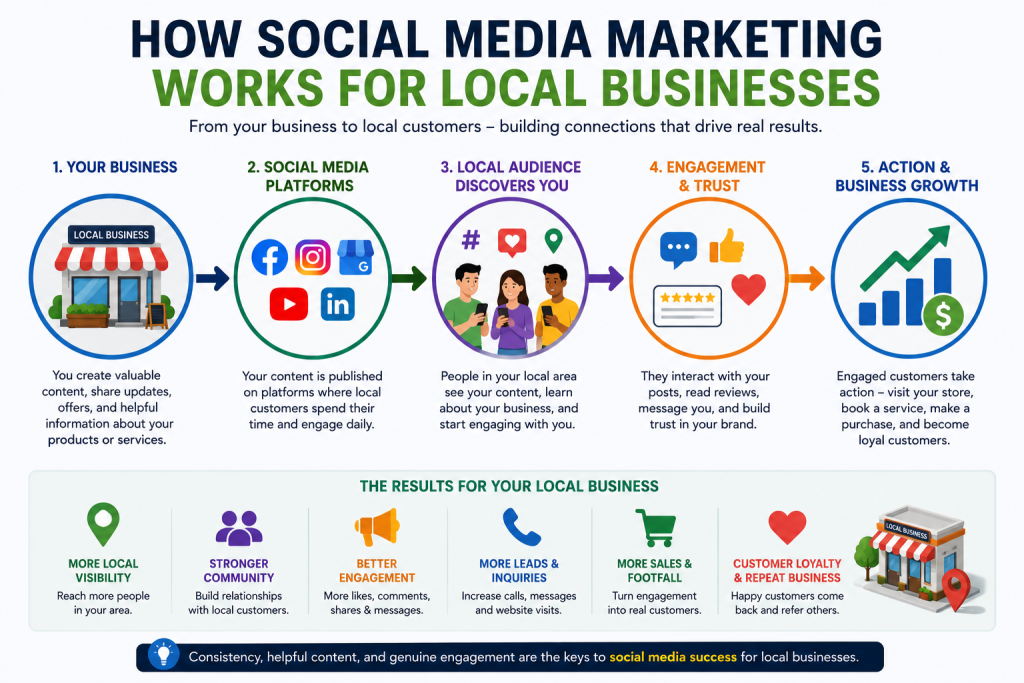
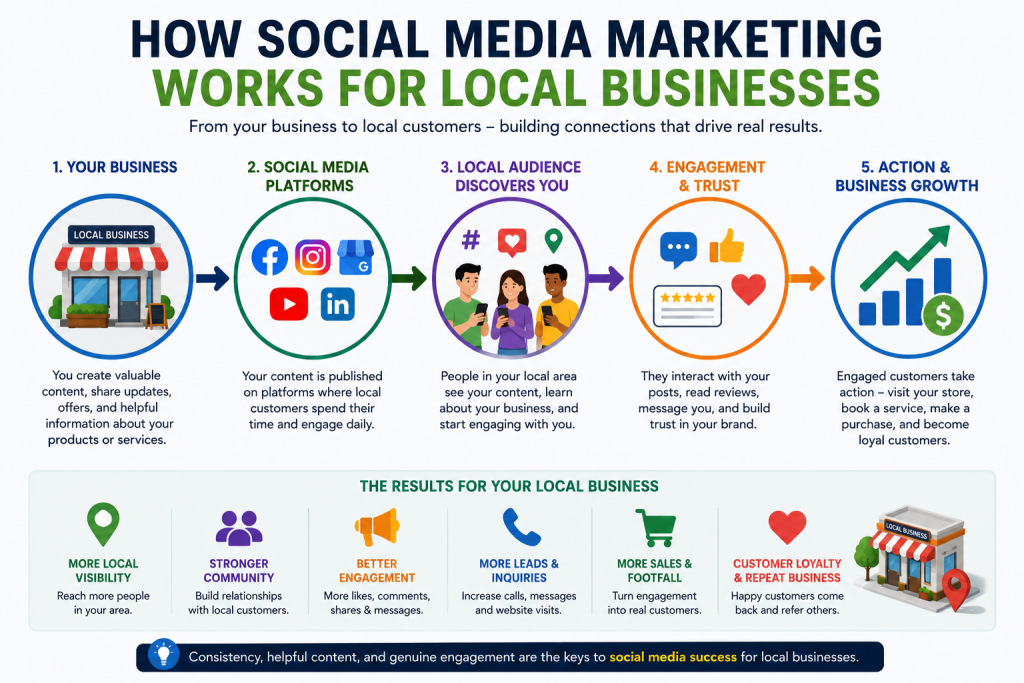
Social media marketing for local businesses is the process of using platforms such as Facebook, Instagram, LinkedIn, YouTube, and Google Business Profile to promote products or services to people within a specific geographic area.
Its primary goals include:
- Increasing local brand awareness
- Driving website visits
- Generating inquiries and phone calls
- Encouraging store visits
- Building customer trust
- Improving customer engagement
- Growing repeat business
Unlike national brands, local businesses focus on connecting with nearby customers who are most likely to purchase.
Why Social Media Matters More Than Ever for Local Businesses
Today’s consumers expect businesses to have an active online presence.
Before visiting your store, customers often check:
- Reviews
- Recent posts
- Photos
- Business hours
- Customer interactions
- Promotions
- Community involvement
An inactive profile can make your business appear outdated, while an active social presence builds confidence.
Benefits include:
- Greater visibility in your local market
- Increased trust
- More customer engagement
- Better lead generation
- Cost-effective advertising
- Stronger customer loyalty
How Social Media Helps Increase Local Customers Online
One of the biggest advantages of social media is precise local targeting.
Instead of advertising to everyone, you can reach people based on:
- City
- Neighborhood
- Age
- Interests
- Occupation
- Buying behavior
For example:
A local bakery can promote festive cakes only within a 10 km radius.
A fitness studio can advertise trial memberships to nearby residents.
A dental clinic can target families living in the surrounding area.
This targeted approach helps increase local customers online while reducing advertising costs.
Choosing the Right Platforms for Your Business
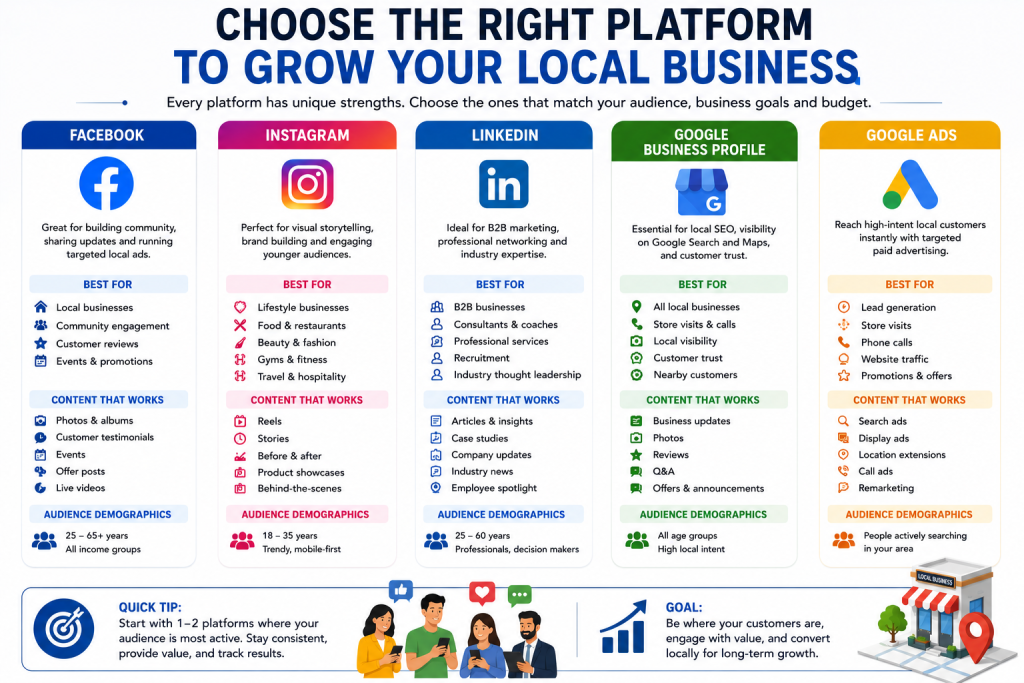
Not every platform delivers the same results.
Facebook Business Page
A Facebook Business Page remains one of the most effective tools for local businesses because it offers:
- Business information
- Reviews
- Messaging
- Local advertisements
- Events
- Community groups
Ideal for:
- Restaurants
- Clinics
- Retail stores
- Salons
- Service providers
Instagram Marketing
Instagram marketing works exceptionally well for visually appealing businesses.
Perfect for:
- Fashion stores
- Cafés
- Hotels
- Gyms
- Beauty salons
- Interior designers
- Food businesses
Post:
- Reels
- Stories
- Customer testimonials
- Behind-the-scenes videos
- Product launches
Google Business Profile
Many people overlook the importance of a Google Business Profile.
Although not a traditional social platform, it significantly improves local visibility by displaying:
- Reviews
- Directions
- Photos
- Business updates
- FAQs
- Contact information
Regular updates complement your social media strategy while supporting local SEO.
Step-by-Step Local Social Media Strategy
Developing a successful local social media strategy doesn’t require a huge budget—it requires consistency.
Step 1: Define Your Target Audience
Ask yourself:
- Who are your ideal customers?
- Where do they live?
- What problems do they face?
- Which platforms do they use most?
The better you understand your audience, the more relevant your content becomes.
Step 2: Optimize Your Profiles
Ensure every platform includes:
- Professional logo
- High-quality cover image
- Business description
- Contact details
- Website link
- Location
- Consistent branding
This creates a trustworthy first impression.
Step 3: Create Valuable Content
People don’t want endless advertisements.
Instead, share:
- Educational tips
- Customer success stories
- Before-and-after images
- FAQs
- Behind-the-scenes content
- Employee highlights
- Community events
- Local partnerships
Aim for an 80/20 balance:
- 80% valuable or entertaining content
- 20% promotional content
Step 4: Maintain a Content Calendar
Planning posts in advance ensures consistency.
A weekly schedule might include:
Monday:
Industry tips
Tuesday:
Customer testimonial
Wednesday:
Behind the scenes
Thursday:
Educational carousel
Friday:
Offer or promotion
Saturday:
Community post
Sunday:
Poll or engagement question
Consistency builds familiarity and trust.
Step 5: Engage With Your Audience
Social media isn’t just about publishing.
Respond to:
- Comments
- Reviews
- Messages
- Mentions
Ask questions.
Create polls.
Thank customers publicly.
This improves customer engagement and strengthens relationships.
Local Business Social Media Tips That Actually Work
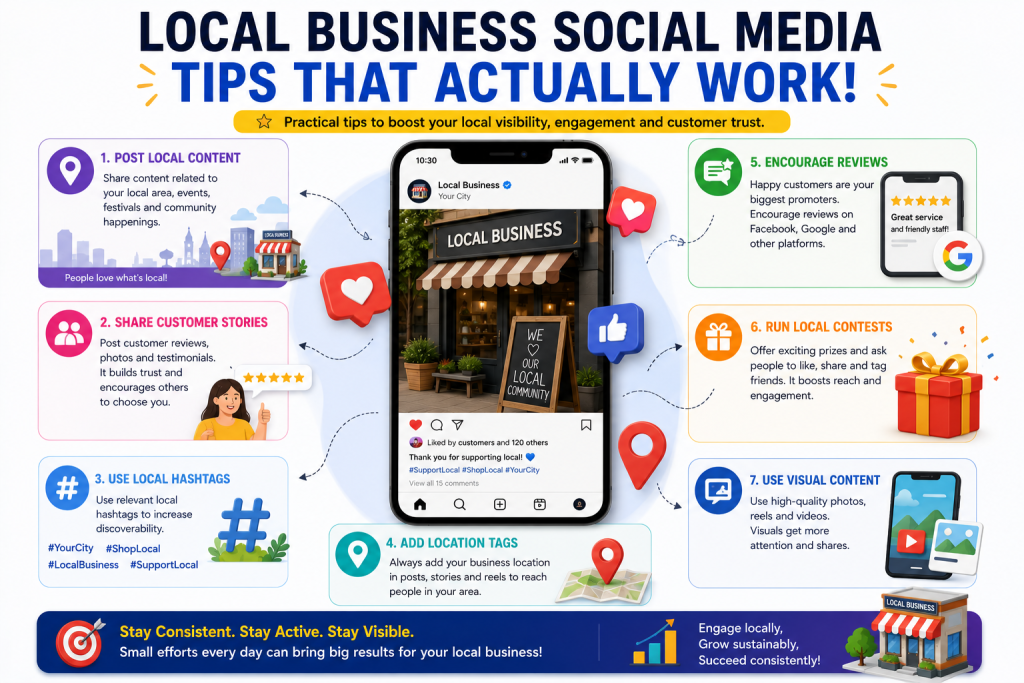
Here are practical local business social media tips you can implement immediately.
Post Local Content
Mention local landmarks, festivals, events, and neighborhoods.
People naturally engage more with familiar locations.
Share Customer Stories
User-generated content builds authenticity.
Feature:
- Customer reviews
- Photos
- Testimonials
- Success stories
Use Local Hashtags
Examples:
- #PuneBusiness
- #SupportLocal
- #ShopLocal
- #LocalCafe
- #PuneFood
These help nearby audiences discover your business.
Add Location Tags
Always tag your business location.
This improves local discoverability.
Run Local Contests
Offer:
- Gift vouchers
- Discounts
- Free consultations
Require participants to:
- Follow your page
- Share the post
- Tag friends
This expands your local reach organically.
Social Media Marketing Examples for Local Businesses
Different industries require different approaches.
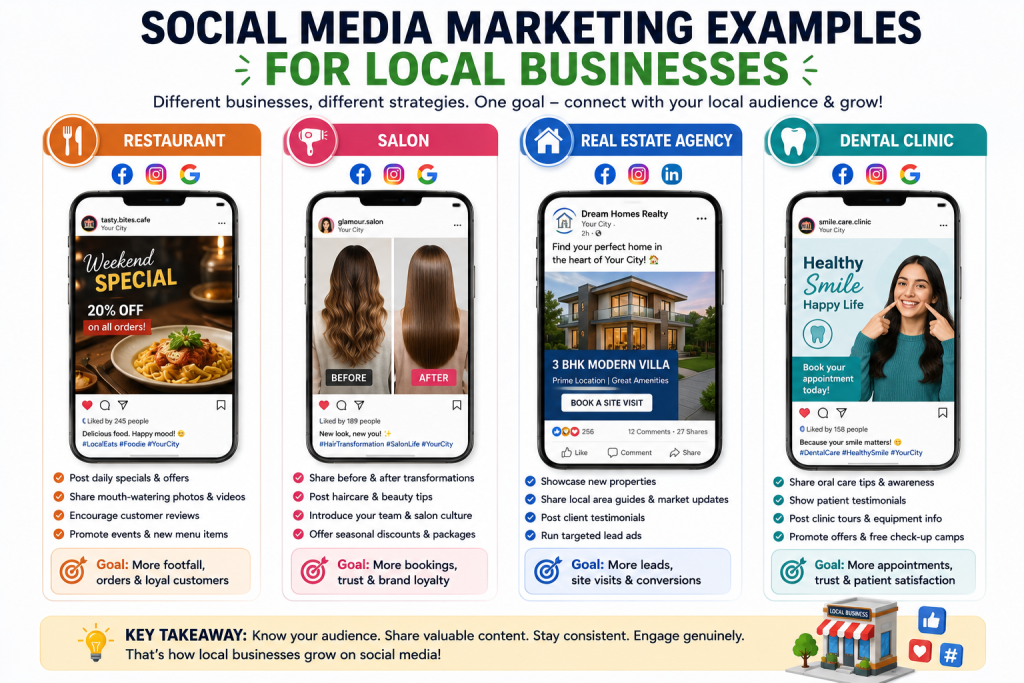
Restaurant
Posts:
- Daily specials
- Kitchen videos
- Customer reviews
- Chef introductions
Salon
Content ideas:
- Before-and-after transformations
- Styling tips
- Seasonal offers
- Staff introductions
Real Estate Agency
Share:
- New listings
- Local neighborhood guides
- Home buying tips
- Market updates
Dental Clinic
Publish:
- Oral care tips
- Patient testimonials
- Clinic tours
- Educational videos
These social media marketing examples show that useful content consistently outperforms constant sales posts.
Common Mistakes Small Business Owners Should Avoid
Many businesses struggle because they:
- Post inconsistently
- Focus only on selling
- Ignore comments
- Use poor-quality visuals
- Copy competitors
- Skip analytics
- Neglect reviews
- Fail to optimize profiles
Avoiding these mistakes dramatically improves performance.
How Social Media Supports Local SEO
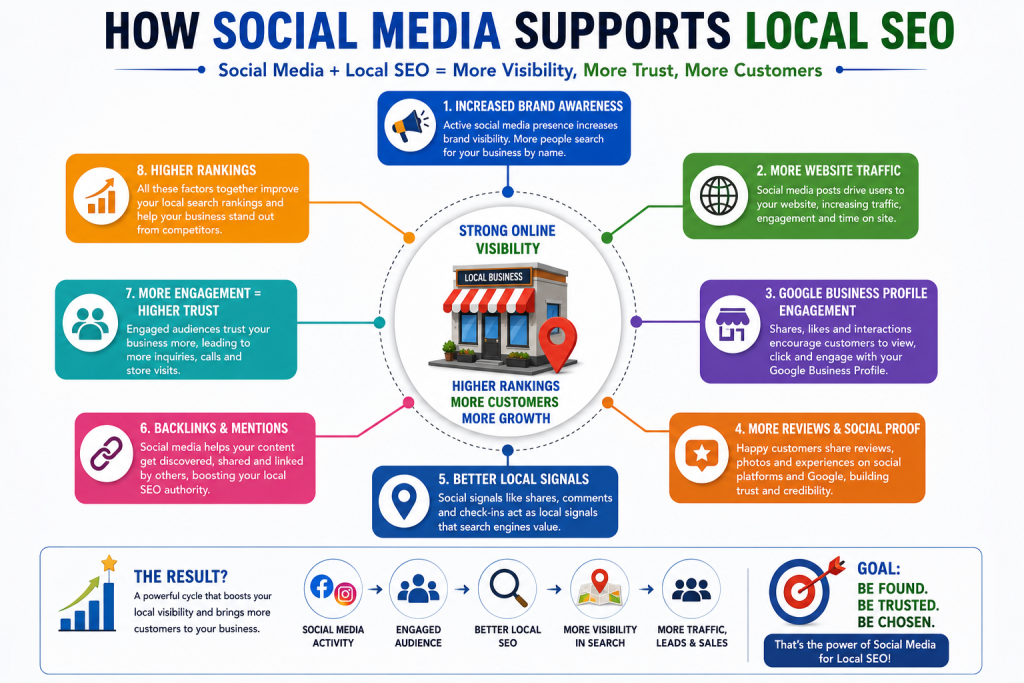
Many people think social media and local SEO are separate strategies.
They’re actually closely connected.
An active social presence helps by:
- Increasing branded searches
- Driving website traffic
- Generating reviews
- Improving local authority
- Encouraging backlinks
- Supporting Google Business Profile updates
Together, these signals strengthen your online visibility.
Measuring Success
Track these important metrics:
- Reach
- Engagement rate
- Website clicks
- Phone calls
- Direct messages
- Leads generated
- Conversion rate
- Follower growth
- Review volume
Focus on business outcomes rather than vanity metrics.